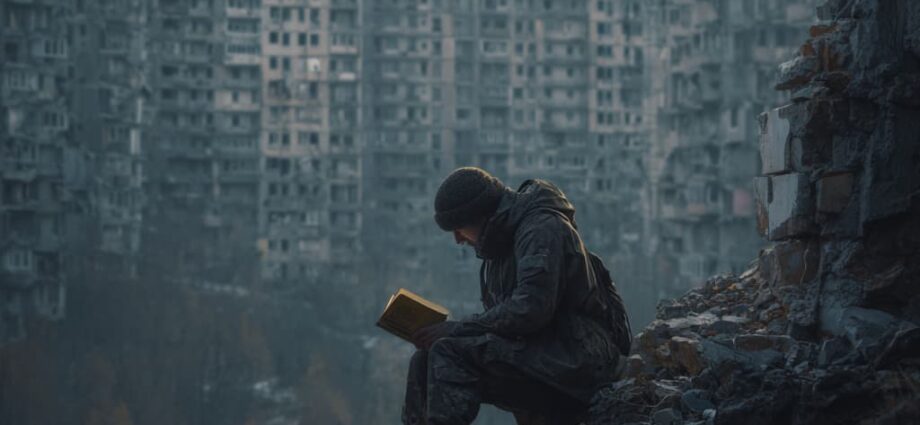
For much of the twentieth century, dystopian fiction occupied a clear place within speculative literature. Readers approached dystopian novels as warnings, exaggerated social experiments, or imaginative visions of possible futures. Books like 1984, Brave New World, and Fahrenheit 451 were powerful precisely because they seemed extreme. Their worlds appeared distant enough to provoke reflection while remaining safely separated from everyday reality.
That emotional distance has begun to disappear.
Modern readers increasingly approach dystopian fiction not as fantasy, but as literature that feels psychologically, socially, and culturally realistic. Many themes that once appeared speculative now resemble familiar elements of contemporary life: constant surveillance, algorithmic influence, information manipulation, emotional isolation, social polarization, digital dependency, and invisible systems shaping everyday behavior.
As a result, dystopian fiction no longer feels like a dramatic prediction of some distant future. For many readers, it feels uncomfortably close to the present.
Technology Changed the Emotional Meaning of Dystopian Fiction
One of the main reasons for this shift is technological transformation. Earlier generations read dystopian fiction during periods when many fictional concepts still felt abstract or improbable. Total surveillance systems, behavioral prediction, mass psychological influence, and constant digital monitoring belonged largely to imagination.
Today, modern society already functions through systems that collect enormous amounts of behavioral data.
People voluntarily carry devices that track:
- location;
- communication patterns;
- browsing habits;
- emotional preferences;
- purchasing behavior;
- social interaction.
Algorithms influence what individuals read, watch, discuss, and emotionally react to throughout the day. Recommendation systems shape cultural exposure. Social media platforms reward visibility, outrage, emotional performance, and rapid reaction cycles.
Modern readers therefore recognize dystopian mechanisms not because society fully resembles fictional totalitarian worlds, but because the emotional logic of those systems no longer feels unfamiliar.
The technology itself may differ from classic dystopian literature, yet the atmosphere increasingly feels recognizable.
Dystopian Fiction Became Emotionally Realistic
The modern perception of dystopian fiction is deeply connected to emotional experience rather than literal political comparison. Most readers do not believe they live inside exact fictional dystopias. However, they increasingly recognize emotional conditions associated with those narratives.
Contemporary life often includes:
- informational overload;
- constant connectivity;
- psychological fatigue;
- social fragmentation;
- distrust toward institutions;
- fear of manipulation;
- blurred boundaries between truth and performance.
These conditions create emotional proximity to dystopian literature.
Earlier readers could treat dystopian worlds as exaggerated warnings because their own daily environments felt relatively stable and predictable. Modern digital culture is far more unstable psychologically. Information changes constantly. Public opinion shifts rapidly. Algorithms amplify conflict. Social media encourages performative behavior and continuous comparison.
As a result, dystopian fiction now feels less like distant fantasy and more like heightened realism.
Many readers no longer ask whether dystopian scenarios are possible. Instead, they recognize elements of them already unfolding in fragmented ways around them.
Social Media Changed How Readers Interpret Fiction
Social media played a major role in transforming the perception of dystopian literature. Platforms built around visibility, engagement, and emotional reaction unintentionally reproduce certain dynamics explored in dystopian narratives for decades.
People increasingly experience:
- public behavioral pressure;
- digital surveillance;
- social scoring through engagement metrics;
- algorithmic reinforcement;
- emotional manipulation through information systems.
Even the structure of online identity resembles themes common in dystopian fiction. Individuals perform versions of themselves publicly while algorithms continuously evaluate visibility and influence.
This creates a cultural environment where dystopian ideas no longer feel symbolic.
Instead, they feel observational.
Modern readers encounter fictional worlds shaped by information control, emotional engineering, or social conformity and immediately connect them to familiar digital experiences. Dystopian fiction becomes easier to emotionally internalize because contemporary life already contains partial versions of those mechanisms.
The Collapse of Trust in Stable Futures
Another reason dystopian fiction feels more realistic today is the weakening belief in stable progress.
For much of the twentieth century, many societies maintained relatively optimistic assumptions about technological development and the future. Technology was often associated with improvement, growth, efficiency, and social advancement. Dystopian fiction existed partly as a counterbalance to that optimism.
Modern culture feels much more uncertain.
Technological advancement now produces both excitement and anxiety simultaneously. Artificial intelligence, automation, misinformation systems, deepfakes, surveillance technologies, and algorithmic decision-making create public unease alongside innovation.
Readers increasingly view dystopian fiction through this atmosphere of instability.
The genre no longer feels like exaggerated pessimism. Instead, it reflects widespread uncertainty about:
- the future of truth;
- the future of work;
- the role of AI;
- digital identity;
- social trust;
- political stability;
- emotional autonomy.
In this context, dystopian literature becomes culturally realistic because it expresses fears already embedded inside contemporary society.
Dystopian Fiction and the Fear of Psychological Control
Earlier dystopian fiction often emphasized physical control: authoritarian governments, censorship, violence, or direct repression. Contemporary readers increasingly focus on psychological control instead.
This shift reflects modern anxieties.
People now worry less about obvious authoritarian systems and more about invisible forms of influence:
- behavioral algorithms;
- emotional targeting;
- addictive platform design;
- digital dependency;
- information manipulation;
- attention engineering.
Dystopian fiction suddenly appears highly relevant because many classic novels explored precisely these themes long before digital culture emerged fully.
Readers notice how fictional societies controlled not only behavior, but perception itself.
That distinction feels extremely modern.
In contemporary digital environments, influence often operates subtly through recommendation systems, information filtering, emotional amplification, and algorithmic visibility rather than overt force. Dystopian literature increasingly feels realistic because its central concern — the shaping of human consciousness through systems — aligns closely with current cultural anxieties.
The Rise of “Soft Dystopia”
Modern readers also perceive dystopian fiction differently because contemporary dystopian fears are often gradual rather than catastrophic.
Classic dystopias sometimes portrayed dramatic political collapse or visibly oppressive regimes. Contemporary society often feels more ambiguous. Many people experience dystopian elements not through sudden disaster, but through slow normalization:
- constant surveillance becomes ordinary;
- emotional overstimulation becomes routine;
- digital dependency becomes unavoidable;
- algorithmic influence becomes invisible infrastructure.
This creates what some readers informally describe as “soft dystopia.”
Life continues normally on the surface while deeper psychological and social structures gradually change underneath. Dystopian fiction feels realistic because modern readers recognize this subtle transformation process in their own environments.
The genre no longer represents impossible futures. It reflects anxieties about systems already integrated into daily life.
Why Dystopian Fiction Resonates More Than Ever
The growing realism of dystopian fiction ultimately reveals something important about contemporary culture itself. Modern readers are not simply becoming more pessimistic. They are becoming more aware of how technology, media systems, and digital environments shape emotional and social reality.
Dystopian literature resonates today because it provides language for describing experiences that often feel difficult to explain directly.
The genre captures:
- psychological fatigue;
- informational instability;
- distrust of systems;
- fear of manipulation;
- emotional fragmentation;
- anxiety about technological dependency.
In earlier decades, dystopian fiction warned readers about possible futures. Today, many readers approach the same works as reflections of the present. The power of dystopian literature no longer comes only from imagining what society could become, but from revealing aspects of what society already feels like.